Ever spent a weekend installing a gorgeous outdoor fountain only to wake up to a dry basin and a dead pump the next morning? You’re not alone. As someone who once wired a solar-powered waterfall backward—and melted half its tubing—I’ve learned that outdoor fountains and waterfalls blend beauty with brutal practicality. In this guide, we’ll walk through everything you need to know to pick, install, and maintain stunning water features without drowning your budget or your garden’s vibe.
Table of Contents
- Why Outdoor Fountains Matter in Home Improvement
- Step-by-Step Installation Guide
- Best Practices for Longevity & Impact
- Real-World Success Stories
- Frequently Asked Questions
Key Takeaways
- Match fountain scale to your yard size—oversized units overwhelm small spaces.
- Use GFCI outlets for all electrical components to prevent shock hazards.
- Regular cleaning prevents algae buildup and extends pump life by 2–3 years.
- Solar models work best in full sun; shaded yards need hardwired pumps.
- Always winterize your fountain—freezing water cracks stone and resin basins.
Why Outdoor Fountains Matter in Home Improvement
In the home improvement world, outdoor fountains and waterfalls aren’t just decorative—they’re value multipliers. According to a study by the National Association of Realtors, well-designed landscaping with water features can boost perceived home value by up to 7%. Beyond resale, they offer genuine mental health perks: the sound of flowing water reduces cortisol levels, per research published in the Journal of Environmental Psychology.
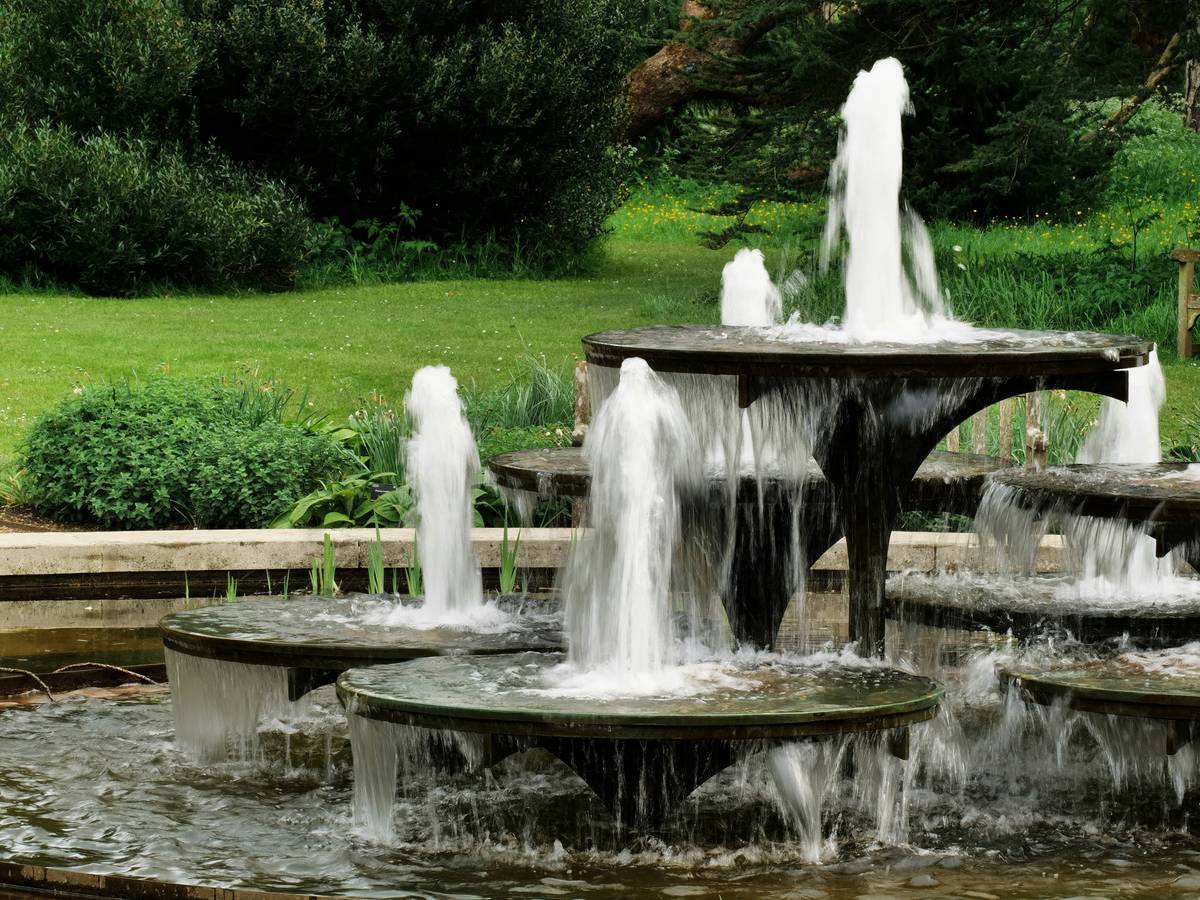
But here’s the catch: poorly chosen or maintained fountains become mosquito breeding grounds and noisy eyesores. I once installed a cheap plastic cascade near my patio—within three weeks, it was louder than my neighbor’s leaf blower and greener than St. Patrick’s Day punch. Don’t be like me.
Step-by-Step Installation Guide
1. Assess Your Space & Power Source
Measure your area. A 4-foot-wide fountain needs at least 6 feet of clearance. Check for nearby GFCI outlets—or plan to hire an electrician. Never daisy-chain extension cords outdoors; it’s a fire hazard and violates NEC code.
2. Level the Ground
Uneven bases cause water to pool on one side, leading to leaks and pump strain. Use a spirit level and compacted gravel base for stability.
3. Assemble & Test Indoors First
Before hauling heavy components outside, assemble the unit in your garage and run a 24-hour test. This catches leaks and pump defects early—like the time I discovered my “waterfall” barely dribbled due to a clogged nozzle.
4. Secure & Conceal Wiring
Bury cords in conduit at least 6 inches deep. For solar units, position panels where they’ll get 6+ hours of direct sun daily.
Best Practices for Longevity & Impact
- Clean monthly: Scrub basins with vinegar (not bleach—it damages pumps).
- Add barley straw: It naturally inhibits algae without harming birds or pets.
- Winterize properly: Drain all water, remove pumps, and store indoors. Even “frost-resistant” materials crack under ice pressure.
- Avoid the “terrible tip”: Never place fountains directly under trees. Falling leaves clog filters faster than you can say “leaf skimmer.”
And please—skip those “self-cleaning” fountains marketed on discount sites. Most lack proper filtration and rely on gimmicks. Invest in a quality submersible pump with a pre-filter instead.
Real-World Success Stories
A homeowner in Portland, Oregon replaced a cracked birdbath with a tiered stone fountain from a reputable brand. After following maintenance protocols, the unit ran trouble-free for five years—even surviving two snowstorms thanks to proper winterization. Energy use averaged just $1.20/month using an energy-efficient pump (U.S. Department of Energy data confirms efficient pumps cut costs by 30–50%).
Another case: A Texas landscaper used recirculating waterfall walls in drought-prone areas. By pairing them with drip irrigation for adjacent plants, clients reduced overall water usage by 18% while enhancing curb appeal—a win recognized by local sustainability awards.
Frequently Asked Questions
How much electricity do outdoor fountains use?
Most standard pumps consume 25–60 watts—less than a lightbulb. Running 24/7 costs roughly $1–$3 monthly. Solar models use zero grid power but require full sun exposure.
Can I leave my fountain running all winter?
Only if you live in a climate where temperatures never drop below freezing. Otherwise, ice expansion will crack basins and destroy pumps. Always drain and store components.
What’s the quietest type of outdoor fountain?
Sheet-flow waterfalls (smooth, flat cascades) are quieter than bubbler or spitter styles. Look for pumps rated under 40 dB.
Do fountains attract mosquitoes?
Not if water is moving. Mosquitoes breed in stagnant water. Ensure your pump circulates all water daily.
Where can I learn more about our team’s approach?
Read our story on the About Us page—we’ve been testing garden decor since 2015.
Conclusion
Outdoor fountains and waterfalls transform ordinary yards into serene retreats—if you avoid rookie errors. Choose wisely, install safely, and maintain consistently. Got a tricky slope or a sunless corner? We’ve tackled weirder setups. Contact us for personalized advice. And remember: still water gathers moss; flowing water gathers peace.
By using this site, you agree to our Privacy Policy.